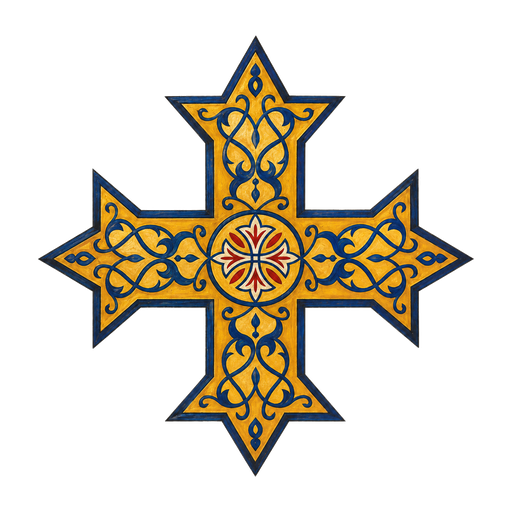
Beliefs and Tradition
Do Copts believe in the Holy Trinity?
The Faith Of The Church
Yes. The Coptic Orthodox Church believes in one God: the Father, the Son, and the Holy Spirit. The Church worships the Holy Trinity in the Creed, baptism, the Divine Liturgy, the sign of the Cross, doxologies, blessings, and daily prayer.
This belief is no secondary detail of Christian faith. The Holy Trinity is the faith into which Christians are baptized and the worship by which the Church stands before God.
Baptizing them in the name of the Father and of the Son and of the Holy Spirit.
One God, Three Persons
The Church confesses one divine essence and three Persons. The Father is God. The Son is God. The Holy Spirit is God. The Father is not the Son, the Son is not the Spirit, and the Spirit is not the Father. Yet the Church does not believe in three gods. She worships one God in Trinity.
The word Trinity gives careful language to what Scripture reveals. It protects worship from two errors: dividing God into three separate beings, or collapsing the Father, Son, and Holy Spirit into one Person wearing different names.
Why This Matters For Jesus Christ
The doctrine of the Trinity protects the truth of salvation. If the Son is not truly God, then He cannot unite us to God. If the Son is not truly man, then our humanity is not healed. The Coptic Church confesses that the eternal Word of God truly became man for our salvation.
This is why Trinitarian faith and Christology belong together. The Incarnation reveals the love of the Father, the self-giving of the Son, and the work of the Holy Spirit. The Cross is not an isolated event. It is the saving work of the Son offered to the Father in the Spirit for the life of the world.
The Word became flesh and dwelt among us, and we beheld His glory.
You will hear the Trinity constantly in church. The priest blesses in the name of the Father, the Son, and the Holy Spirit. The people make the sign of the Cross. The Creed confesses the Father Almighty, the one Lord Jesus Christ, and the Holy Spirit, the Lord, the Life-Giver.
The Liturgy itself is Trinitarian prayer. The Church gives thanks to the Father, through the Son, in the Holy Spirit. Communion
The Creed As A Teacher
The Creed is one of the best places to begin. It does not explain every theological term at once, but it gives the Church's grammar of worship. The faithful learn to say what the Church believes before they can explain every word completely.
That matters pastorally. A person can start by praying and hearing the Creed, asking questions, and slowly learning why the Church speaks with such precision. The precision is not cold. It is love guarding the truth of the God who saves.
The Trinity And Salvation
The doctrine of the Holy Trinity answers a deeply practical question: who saves us, and what kind of life are we being brought into? The Father sends the Son. The Son becomes incarnate, dies, rises, and ascends. The Holy Spirit is poured into the Church, makes the sacraments living, sanctifies the faithful, and teaches them to cry out to the Father.
Salvation is therefore not only pardon from guilt. It is communion with God. The Church is gathered into the life of the Father through the Son in the Holy Spirit. This is why Orthodox teaching refuses to treat the Trinity as an optional puzzle. The name of God revealed in baptism is the life into which the believer is baptized.
Why The Church Guards The Words
Words such as essence, Person, begotten, and proceeding may sound technical. They became necessary because the Church had to protect worship. Christians were already praying to Christ, baptizing in the Trinitarian name, invoking the Holy Spirit, and receiving salvation as the work of God. The careful words guard that living faith.
When someone hears precise doctrine, the goal is not to win a religious argument. The goal is to preserve the truth that God Himself has come near. The Son is truly God with the Father, and the Spirit is truly God with the Father and the Son. Because this is true, worship, baptism, prayer, and Communion are grounded in God's own life.
The sign of the Cross is a short confession of the Trinity and the saving Cross of Christ. When the faithful make the sign of the Cross, the body joins the words of faith. Worship is not only mental agreement. The whole person is drawn into prayer.
For someone learning the Coptic rite, this may be one of the first Trinitarian practices noticed. You do not need to imitate every movement immediately. Watch how often the Church returns to the name of the Father, Son, and Holy Spirit. Repetition teaches the heart.
Ask where the Trinity appears in the Liturgy. Ask why baptism is done in the Trinitarian name. Ask how the Creed speaks about the Son and the Holy Spirit. Ask why the Church is so careful about the words one essence and three Persons.
The Coptic answer to the Holy Trinity is not abstract speculation. It is the worship of the living God. The doctrine is prayed because salvation is communion with the Father through the Son in the Holy Spirit.
- The Holy Trinity, Coptic Orthodox Diocese of the Southern United States. Catechetical lecture on the doctrine of the Holy Trinity.
- The Holy Trinity Continued, Coptic Orthodox Diocese of the Southern United States. Continuation lecture on Trinitarian doctrine and theological language.
- Where Does the Trinity Doctrine Come From?, Coptic Orthodox Diocese of the Southern United States Q&A. Pastoral answer on biblical and historical grounding for the doctrine of the Trinity.
- The Divine Liturgy of St. Basil, CopticChurch.net. Service text and introduction for the most commonly used Coptic Divine Liturgy.
Orthodox: Right worship and right belief, naming the Church's received apostolic faith and the life of worship that preserves it.
Holy Trinity: The one God confessed as Father, Son, and Holy Spirit, one essence and three Persons, worshiped and glorified together.
Creed: The Church's shared confession of faith, proclaimed in the Liturgy before the Eucharistic prayer as the faithful stand together in apostolic belief.
Baptism: The sacrament of new birth by water and the Holy Spirit, joining a person to Christ's death and resurrection and to the life of the Church.
Divine Liturgy: The Church's central Eucharistic worship, where Scripture, Creed, offering, thanksgiving, consecration, and Communion are gathered into one prayer before God.
Sign of the Cross: The Christian gesture of tracing the Cross on the body while confessing the Holy Trinity and Christ's saving Cross.
Incarnation: The mystery that the eternal Word of God truly became man for our salvation while remaining fully divine.
Holy Communion: The faithful receiving the true Body and Blood of Christ in the Eucharist, after baptismal life, repentance, confession, fasting, reconciliation, and pastoral preparation.