
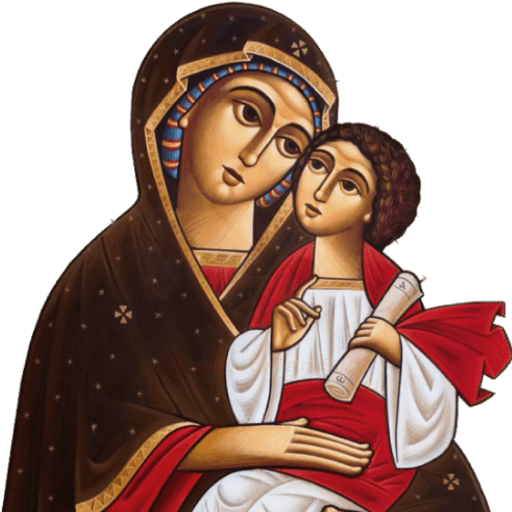
Fast and Feast of the Assumption of St. Mary's body
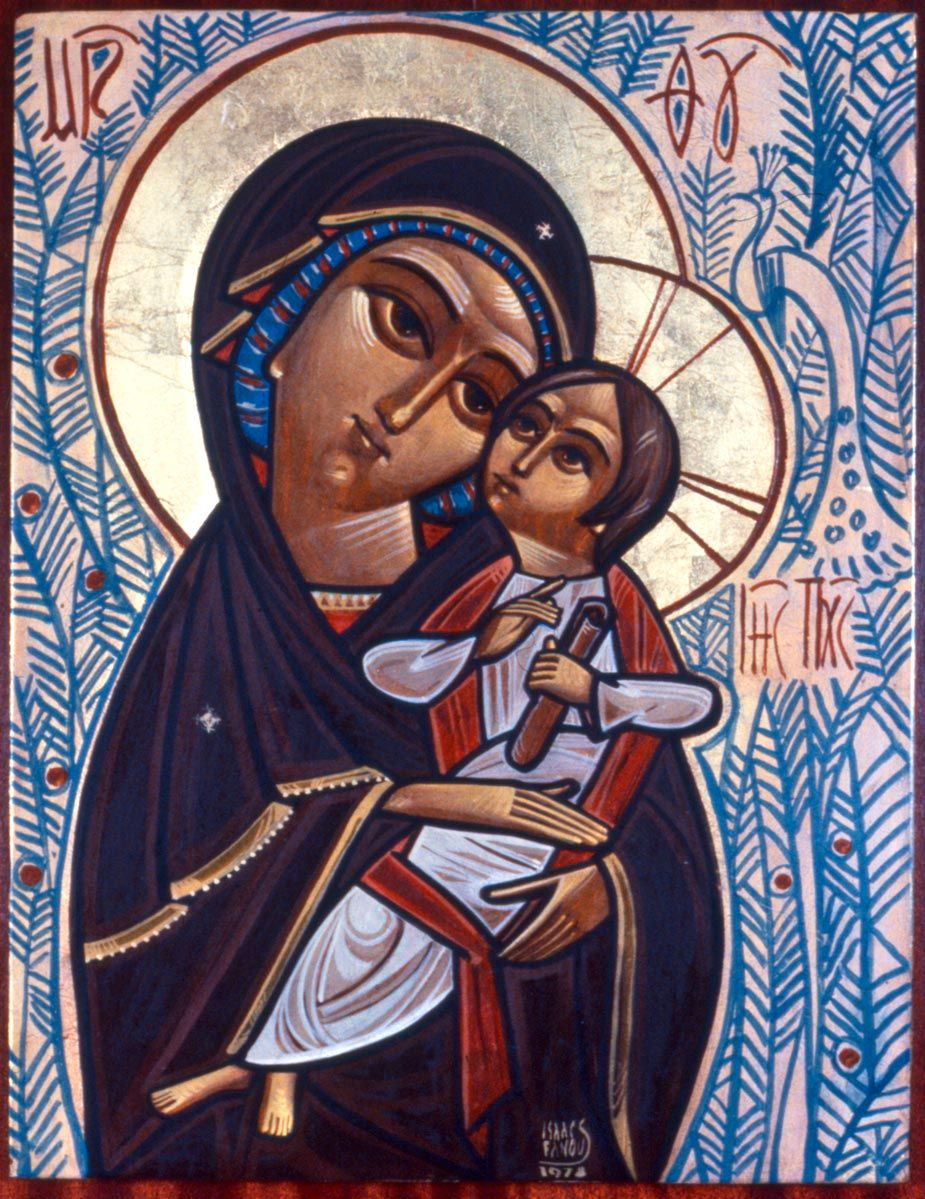
Blessed among women, our Theotokos
This lesson teaches the Coptic Orthodox confession concerning St. Mary and the meaning of her fast. We will first receive the Church's teaching positively, then compare it carefully with other Christian traditions. Every teaching concerning St. Mary begins with the mystery of her Son.
Three kinds of authority will appear: ecumenical doctrine, received liturgical and patristic tradition, and pastoral discipline. Ecumenical doctrine defines the Church's dogmatic confession. Received tradition shows how the Church has inherited, prayed, and lived that faith. Pastoral discipline guides how a person practices it under the care of the Church.
St. Mary in the Gospel of her Son

St. Mary's place in the Church begins in the Gospel.
- Receive. At the Annunciation she receives God's word in faith: "Let it be to me according to your word" (Luke 1:38).
- Magnify. She praises God her Savior and proclaims His mercy (Luke 1:46-55).
- Serve. She goes quickly to Elizabeth (Luke 1:39-45).
- Ponder. She keeps the words concerning Christ in her heart (Luke 2:19, 51).
- Direct us to Christ. At Cana she tells the servants, "Whatever He says to you, do it" (John 2:5).
- Remain. She stands near the Cross (John 19:25-27).
- Pray. She gathers with the apostles as the Church awaits Pentecost (Acts 1:12-14).
She is fully human. She is a faithful disciple, the mother of the incarnate Lord, and the foremost saint. The Church honors her because of the grace of God at work in her and because of the unique Person whom she bore.
Theotokos confesses who Jesus Christ is
The Greek title Theotokos means God-bearer or Mother of God. It does not mean that St. Mary created the divine nature or existed before God. It identifies the Person born from her.
The Person born from St. Mary is the eternal Son of God. His divinity is eternal with the Father. In time, He truly received complete humanity from St. Mary through the Holy Spirit. His divinity and humanity belong to the one Lord Jesus Christ.
The title Theotokos is therefore a confession about Christ. The child born from her is not a separate human person beside the Word. He is the eternal Word Himself, incarnate for our salvation.
The Church sings the faith she received
Coptic worship keeps the Incarnation before the eyes of the faithful.
- The Sunday Theotokia draws the tabernacle and other Old Testament images toward the Incarnation, calling St. Mary the true tabernacle because the Word truly dwelt within her.
- The Psali Watos for the Fast of St. Mary begins by praising the Lord Jesus Christ and names His mother Mary the Theotokos.
- The Doxology of St. Mary blesses her as the prudent and chaste second tabernacle and the treasure of the Holy Spirit.
These hymns are not a second Gospel. They are received liturgical witnesses that teach the Church to pray the Christ-centered faith of Scripture.
From Athanasius and Cyril to Ephesus
St. Athanasius of Alexandria gives the Incarnational foundation in On the Incarnation: the eternal Word truly takes a human body like ours for our salvation. His purpose is to explain the saving work of the Word, not to formulate a later Marian definition. Yet this foundation matters. The one who is born, suffers, dies, and rises according to the flesh is the eternal Word who made our humanity His own.
In the fifth century, the dispute became explicit. Nestorius resisted calling St. Mary Theotokos because he wished to protect the impassibility of the divine nature. St. Cyril of Alexandria agreed that the divine nature does not suffer, but he pressed the decisive question: who is the Person acting throughout the Gospel?
Cyril taught that the eternal Word personally united complete humanity to Himself. The human birth, suffering, death, and resurrection truly belong to the one incarnate Word according to the flesh. The Council of Ephesus in 431 received Cyril's Second Letter as agreeing with Nicaea. It confessed St. Mary as Theotokos because her Son is the one eternal Word incarnate.
Ephesus is fundamentally about the identity of Christ. It does not elevate St. Mary independently from Him. Its central lesson is simple: Theotokos tells us who Jesus is.
Why the Church keeps the Fast of St. Mary
The fast is kept from 1 through 15 Mesori, commonly August 7 through 21. The feast follows on 16 Mesori, commonly August 22. The Church also commemorates St. Mary's departure on 21 Tobe.
The surviving record gives no single founding decree for the fast. It developed within the Church's life, became especially beloved among the faithful, and prepares the Church for the feast of the Assumption of St. Mary's body.
We offer the fast to God. We ask St. Mary's prayers and learn from her faithful response. The season joins fasting to prayer, repentance, mercy, worship, and hope in the resurrection of the body.
The local bishop, priest, and father of confession guide the practical fasting rule. Health, medication, pregnancy, age, eating disorders, and demanding work deserve wise pastoral care. Catechumens and inquirers should follow their priest and catechumenate. Confession, Communion, and other sacramental disciplines described in this lesson apply to baptized Orthodox participants under pastoral guidance.
What the Coptic Church teaches
St. Mary is holy and sanctified
St. Mary is fully human, saved by Christ, exceptionally holy, and sanctified by the Holy Spirit for her unique vocation. She praises "God my Savior" (Luke 1:47). The Coptic Church does not define a separate dogma exempting her conception from the inherited human condition that Christ came to heal.
Around AD 180, St. Irenaeus insists that Christ received real human flesh from St. Mary and sets her obedient faith beside Eve's disobedience. This is an early witness to her full humanity and faithful participation in Christ's saving work; it does not define a separate doctrine about her conception.
The Church commemorates her departure and the Assumption of her body
The Synaxarium commemorates her departure on 21 Tobe and the later taking of her body into heaven on 16 Mesori. The feast is received within liturgical and patristic tradition and points toward the general resurrection promised in Christ.
No surviving ante-Nicene Father clearly teaches the Assumption. That historical boundary matters: the Coptic Church receives the feast through its Synaxarium and worship rather than claiming that one early quotation proves it.
Revelation 12 may be read typologically with Marian resonance within its wider image of the people of God and the Church. It is not an isolated proof text for the Assumption or for a complete Marian doctrine.
St. Mary is Ever-Virgin
The Church confesses her as virgin before, during, and after the birth of Jesus Christ. This teaching honors the unique mystery of the Incarnation and her lifelong consecration. The Church reads references to the brothers of Jesus through ancient kinship language and apostolic Tradition.
Around AD 248, Origen reports the early explanation that Jesus' brothers were Joseph's children from a former marriage and speaks of St. Mary's virginity "to the end." His text witnesses to an existing ante-Nicene belief; it does not make the apocryphal source he mentions into Scripture.
The Church honors her and asks her prayers
Worship belongs to the Father, the Son, and the Holy Spirit. St. Mary receives the highest honor among the saints, and the Church asks her intercession. Christ alone redeems humanity and reconciles us to the Father. The prayers of the saints exist within His one saving mediation, never beside it.
Origen's ante-Nicene On Prayer says that the saints at rest pray with the faithful. It witnesses to heavenly intercession, though not by itself to directly invoking St. Mary. The Egyptian Rylands Greek Papyrus 470 preserves an early prayer to the Theotokos; the holding institution dates it broadly to the third or fourth century, so it cannot be presented as securely pre-Nicene.
Comparing Christian traditions
The terms must be clear. Oriental Orthodox refers here to the Coptic Church and its sister churches that receive Nicaea, Constantinople, and Ephesus as the three ecumenical councils. Eastern Orthodox refers here to the Chalcedonian Orthodox churches. Roman Catholic refers to churches in communion with Rome. Protestant covers many confessional families and independent congregations rather than a single teaching office. The summaries below are representative patterns; individual churches vary.
Sanctification and conception
- Coptic Orthodox. St. Mary is fully human, saved by Christ, exceptionally holy, and sanctified by the Holy Spirit for the Incarnation. She calls God her Savior. The Coptic Church does not define a separate exemption from humanity's inherited condition.
- Eastern Orthodox. Her holiness by grace is broadly shared. She is commonly called All-Holy and without personal sin while sharing humanity's mortal condition.
- Roman Catholic. The Immaculate Conception was defined in 1854: Mary was preserved from every stain of original sin from the first moment of conception. The Coptic Church does not receive this papal definition as binding dogma.
- Representative Protestant positions. Most define no separate doctrine of her conception. Views of her holiness vary.
Departure and Assumption
- Coptic Orthodox. The Church commemorates St. Mary's departure and the later Assumption of her body into heaven through its Synaxarium and feast, within the hope of the general resurrection.
- Eastern Orthodox. The ancient Dormition feast celebrates her death and bodily glorification.
- Roman Catholic. The Assumption was defined in 1950: Mary was assumed body and soul into heavenly glory. The definition does not decide whether she died. The Coptic Church receives its ancient feast but not this papal definition as binding dogma.
- Representative Protestant positions. Most leave her individual end undefined while affirming the future resurrection of believers.
Perpetual virginity
- Coptic Orthodox. The Church confesses St. Mary as virgin before, during, and after the birth of Christ.
- Eastern Orthodox. Perpetual virginity is shared in doctrine, liturgy, and iconography.
- Roman Catholic. Perpetual virginity is shared as the Church's ancient teaching.
- Representative Protestant positions. Historic confessional standards across major Protestant traditions affirm the virgin birth; individual churches and teachers vary concerning lifelong virginity.
Veneration and intercession
- Coptic Orthodox. The Church honors St. Mary as foremost among the saints and asks her prayers. Christ alone redeems humanity, and worship belongs to the Trinity.
- Eastern Orthodox. Veneration and intercession are shared within the communion of saints.
- Roman Catholic. The distinction between worship of God and honor for the saints is shared, with distinct Marian titles and devotions.
- Representative Protestant positions. Most honor St. Mary as blessed and exemplary without invoking departed saints.
Nicaea II formally addressed holy icons and distinguished honorable veneration from the worship due to God alone. It did not separately define the invocation of saints. The Coptic Church does not receive Nicaea II as an ecumenical council, while its own ancient practice also distinguishes veneration from worship.
Christ remains at the center
Each teaching about St. Mary protects or illuminates a truth about Christ.
- Theotokos: the Incarnation is real. The eternal Word truly received complete humanity.
- Ever-Virgin: His birth is unique, and her lifelong consecration serves that mystery.
- The Assumption: the human body is destined for glory, and the feast points toward the resurrection promised in Christ.
- Intercession: the members of Christ's Body remain alive in Him, and their prayers depend entirely upon His mediation.
Right teaching about St. Mary leads more deeply into the mystery of her Son.
Keeping the fast
The fast is not a private challenge or a list of unrelated devotional exercises. It is a season the Church offers to God in preparation for the feast.
- Fast according to the pastoral guidance you have received.
- Pray with Scripture, the Agpeya, the hymns of the season, and the parish's services.
- Repent by turning from sin and seeking reconciliation.
- Give through concrete and hidden works of mercy.
For baptized Orthodox participants, confession and Eucharistic preparation belong within the guidance of the priest and father of confession. Catechumens and inquirers should follow their priest and catechumenate and join the Church's prayer, Scripture, mercy, and services as directed.
Download the complete reading guide as a PDF
Sources
Scripture: Isaiah 7:14; Luke 1:26-56; Luke 2:1-52; Matthew 1:18-25; John 1:1-18; John 2:1-11; John 19:25-27; Acts 1:12-14; Romans 8:18-25; 1 Corinthians 15:20-23, 42-49; Galatians 4:4-7; 1 Timothy 2:1-5; James 5:16; Revelation 5:8, 8:3-4, and 12; Ezekiel 44:1-3 as a received typological reading.
Coptic Orthodox teaching and worship
- Coptic Orthodox Church, The Ecumenical Councils
- Pope Shenouda III, The Holy Virgin St. Mary
- Pope Shenouda III, The Spirituality of Fasting
- Pope Tawadros II on the Fast of the Virgin Mary
- Synaxarium, 21 Tobe, the departure of St. Mary
- Synaxarium, 16 Mesori, the Assumption of the body of St. Mary
- Official Coptic account of Theotokias and the title Theotokos
- Sunday Theotokia
- Psali Watos for the Fast of St. Mary
- Doxology of St. Mary
Fathers and councils
- St. Athanasius, On the Incarnation
- St. Athanasius, Discourses Against the Arians III
- St. Justin Martyr, Dialogue with Trypho 100
- St. Irenaeus, Against Heresies III.22
- Origen, Commentary on Matthew X.17
- Origen, On Prayer XI
- Martyrdom of St. Polycarp 17
- St. Cyril of Alexandria, Second Letter to Nestorius
- Council of Ephesus, primary acts and correspondence
- Second Council of Nicaea, decree on holy images
Comparison sources
- Orthodox Church in America, The Mother of God
- Orthodox Church in America, Dormition of the Theotokos
- Pius IX, Ineffabilis Deus, 1854
- Pius XII, Munificentissimus Deus, 1950
- Augsburg Confession, Article 21
- Westminster Confession of Faith
- Baptist Faith and Message
- Assemblies of God, Statement of Fundamental Truths
Optional bridge reading
- Peter Gillquist, Becoming Orthodox. This Eastern Orthodox conversion narrative may help Protestant inquirers understand an evangelical journey into Orthodoxy. It is not a primary Coptic source, and no Coptic doctrinal or liturgical claim in this lesson depends on it.