Reverence and Participation
Why do people make the sign of the Cross so often?
The Sign of the Cross And Worship With The Whole Person
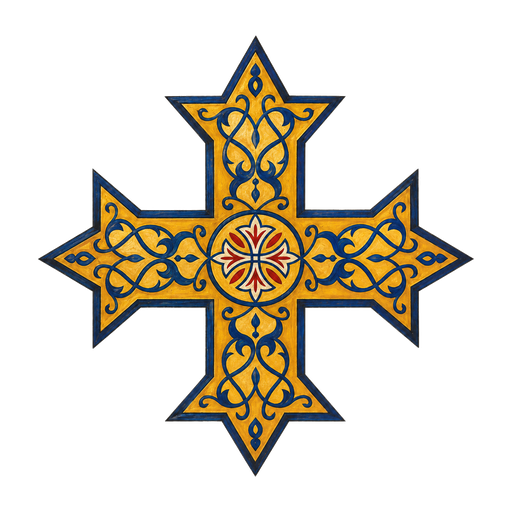
People make the sign of the Cross often because the Cross is the sign of salvation, blessing, repentance, and Christian identity. The gesture also confesses the Holy Trinity: Father, Son, and Holy Spirit. It is a prayer made with the body.
God forbid that I should boast except in the cross of our Lord Jesus Christ.
Why It Happens So Many Times
You may see people cross themselves at the mention of the Trinity, during blessings, at the Gospel, before receiving holy things, when entering or leaving the church, and during personal prayer. Repetition is part of formation. The Church repeats what the soul must remember.
How Copts Usually Make It
Copts commonly join three fingers together for the Holy Trinity and move from forehead to chest, then from left shoulder to right shoulder. If you are not yet Orthodox, you can watch and learn without forcing yourself to copy every motion immediately.
A Visitor's Starting Point
If the gesture feels unfamiliar, begin by understanding what it confesses. The Cross is not a charm or a performance. It is a simple embodied prayer: Lord Jesus Christ, let my mind, heart, and actions belong to You.
Orthodox worship assumes that the body can learn reverence through the sign of the Cross. Standing, sitting, bowing, crossing oneself, kissing an icon, or making a metanoia are not theater. They are bodily ways of praying with humility, attention, and love.
A visitor should receive practices around the sign of the Cross slowly. The goal is neither performance nor self-conscious imitation. The goal is to let worship train the body and the heart together, at a pace that is honest and peaceful.
Present your bodies a living sacrifice, holy, acceptable to God, which is your reasonable service.
The Sign of the Cross forms attention. The body learns when to be still, when to bow, when to receive blessing, when to stand for the Gospel, and when to make room for another person. These habits slowly reshape the way a person enters holy things.
The Coptic approach to the sign of the Cross is patient. A visitor can begin with reverence and honesty, then learn the fuller practice through repetition. Growth in worship is usually quiet, concrete, and cumulative.
A visitor can ask what the body is being taught through the sign of the Cross. Some gestures teach humility, some teach attention, some teach honor, and some teach the person to pray with more than thoughts.
The deeper question is how reverence around the sign of the Cross becomes natural. Repetition matters because the body often learns slowly, and the Church's physical practices give prayer a stable shape.
The first concern around the sign of the Cross is often practical: what should I do with my body? The deeper answer is that the body is being invited into prayer. Reverence is learned through repeated, concrete actions.
Coptic worship does not ask the body to disappear. It asks the body to confess the same faith as the mind and heart. The Sign of the Cross becomes part of that confession when it is practiced with humility rather than anxiety.
Health, age, disability, pregnancy, exhaustion, and unfamiliarity should be treated with compassion. The point of the sign of the Cross is prayer, not embarrassment.
- Drawing the Sign of the Cross, Coptic Orthodox Diocese of the Southern United States Q&A. Pastoral answer on the hand shape, direction, and Trinitarian meaning of making the sign of the Cross.
- Direction of the Sign of the Cross, Coptic Orthodox Diocese of the Southern United States Q&A. Pastoral answer on the direction of the sign of the Cross in Eastern and Oriental Orthodox practice.
- Why We Face East, Mighty Arrows Magazine, SUSCopts. Parish-level explanation of facing east in prayer and worship.
Sign of the Cross: The Christian gesture of tracing the Cross on the body while confessing the Holy Trinity and Christ's saving Cross.
Holy Trinity: The one God confessed as Father, Son, and Holy Spirit, one essence and three Persons, worshiped and glorified together.
Orthodox: Right worship and right belief, naming the Church's received apostolic faith and the life of worship that preserves it.
Icon: A sacred image of Christ, St. Mary, an angel, a saint, or a holy event. In Coptic practice, church icons are consecrated with Holy Myron and are venerated, not worshiped.
Metanoia: A bodily bow or prostration expressing repentance, reverence, and humility before God, often practiced in prayer and before receiving a blessing.
Confession: The sacrament of repentance in which a person confesses sins before God in the presence of the priest and receives absolution and guidance.